

An industrial electronic product can spend years installed in equipment subjected to severe vibration, humidity, dust, extreme temperature variations and long operating hours. In this scenario, making equipment work is just the first step. The real challenge is maintaining its performance consistently over time and within the conditions for which it was developed.
But, after all, what makes an electronic product truly reliable?
The answer is not in a single step. Reliability is built by a sequence of decisions that begins in development and continues throughout manufacturing.
Reliability starts before production
Before reaching the factory, a product needs to be developed considering the real application in which it will be used. The definition of requirements, adequate sizing, choice of components and inclusion of necessary protections are part of this first layer of reliability.
It is also at this stage that the integration between Engineering and Production gains importance: a good project must not only meet the technical requirements, but also allow what was defined to be reproduced consistently on the assembly line.
Good components need equally reliable processes
The quality of the components is fundamental, but it does not act alone. Correct identification, adequate storage, conservation, version control and availability of the material specified for each product directly influence manufacturing consistency.
In practice, reliability depends on both the raw material used and the method by which the product is manufactured.
It is in production that the project takes shape
In the factory, what exists in drawings and instructions becomes a physical, repeatable and safe product. It is at this moment that the execution details take on a decisive role.
Operations such as assembly, welding, connections, fixings, application of adhesives and protection of electronic assemblies must follow defined criteria and controlled conditions. Using appropriate tools, equipment, jigs and process parameters helps reduce variations and makes execution predictable. Reliability is a direct consequence of the precision of each step.
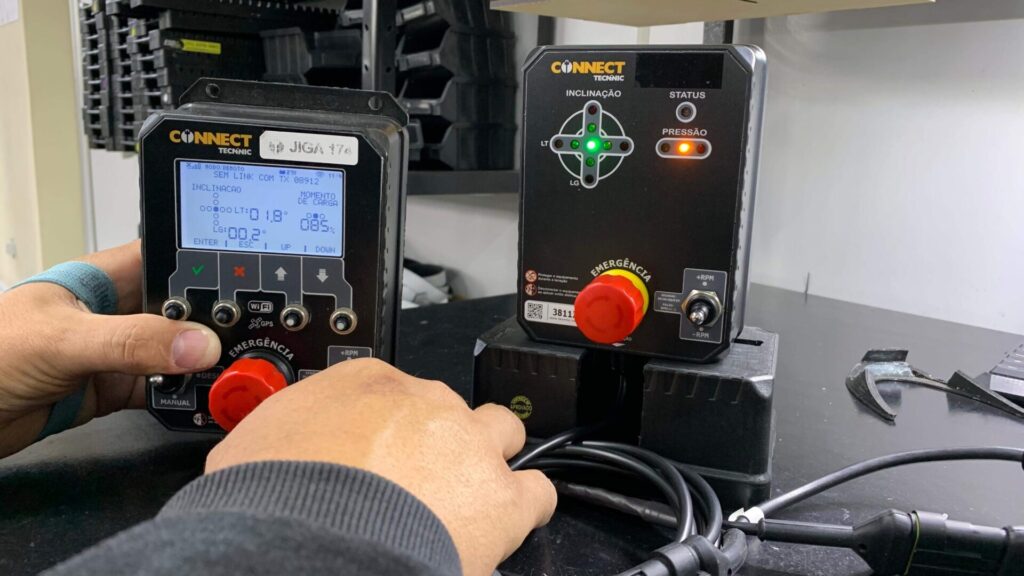
Well-defined methods guarantee the repeatability and quality of each batch.
Standardizing is transforming knowledge into consistency
Experience and skill are valuable, but a robust industrial process cannot depend exclusively on the memory of those who perform an activity.
At Tecnnic, all products have Work Instructions (IT) aligned with Engineering, creating a clear reference for each production process. These instructions — associated with team training, defined parameters, devices and control points — transform technical knowledge into a reproducible method.
Standardizing does not mean preventing improvements. On the contrary: it establishes a safe reference to execute the process and, from there, identify opportunities for evolution. The smaller the variation in a process, the greater the predictability of its result.
Quality monitored during manufacturing
The quality of a product does not only emerge in the final test. Checks carried out throughout the process allow monitoring important characteristics at the time each operation is performed.
Production, Quality and Testing act as parts of the same system: preventing variations, verifying compliance with defined criteria and ensuring product consistency.
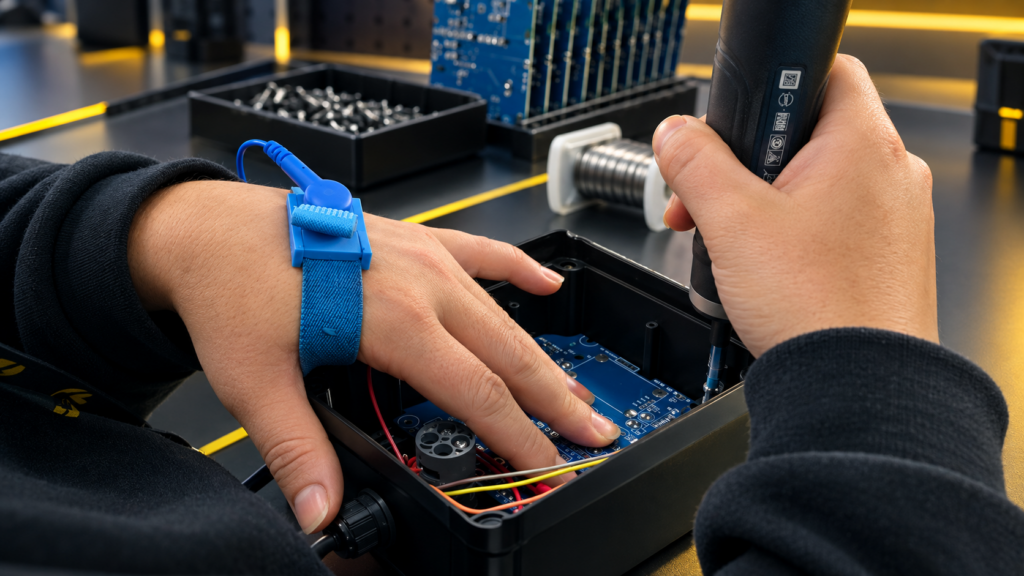
Strict measurements during assembly prevent deviation from technical parameters.
The final test confirms work that began long before
In addition to the controls carried out during manufacturing, all Tecnnic products are validated through dedicated test jigs, developed to verify its operation and the specific criteria of each application. The use of jigs makes validation standardized and repeatable, ensuring that each unit meets requirements before going to the customer.
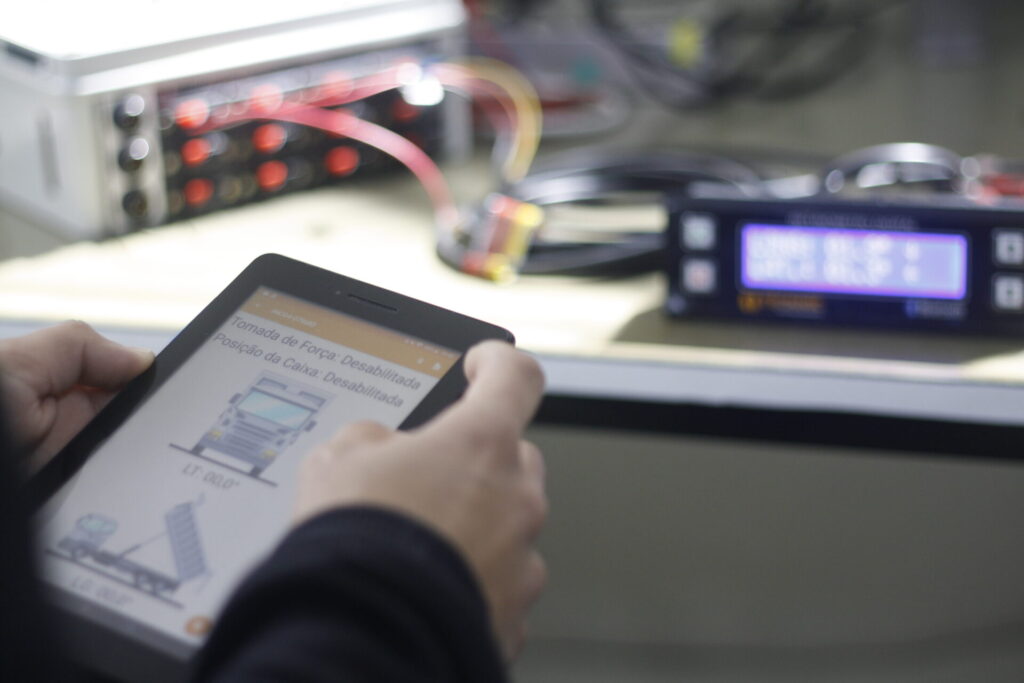
Final testing does not create product reliability: it only confirms the result of a rigorous process built to achieve it.
When we talk about the reliability of an industrial electronic, we are talking about the perfect combination between project, components, people, methods, controls and tests. The customer receives the finished product, but behind it there is a sequence of decisions and care that ensures that quality turns into trust with each delivery.
By Guilherme Daros
Production Manager at Tecnnic Eletrônica Industrial
Industrial Electronic Reliability Frequently Asked Questions (FAQ):
What determines the reliability of an industrial electronics?
Reliability is the result of integration between project engineering, choice and conservation of components, standardization of production processes (welding, assembly and resin application), continuous quality control and validation by test jigs.
How does factory standardization prevent failures in electronic products?
Standardization reduces operational variations by using engineering-aligned work instructions, assembly fixtures/templates, and training. This ensures that each unit is produced with the same predictability and precision.
What is the role of the test jig in the Tecnnic manufacturing process?
The test jig validates the product's operation under standardized conditions before shipping to the customer. At Tecnnic, all products undergo dedicated test jigs to confirm strict compliance with technical specifications.








